

After roller issues, lock and hinge problems are the most common pocket door complaints we hear from homeowners and business owners across Florida. A lock that will not latch, a hinge that squeaks relentlessly, or a door that sags no matter how many times you adjust it — these problems affect daily comfort, privacy, and security.
The challenge with pocket door hardware is that it is fundamentally different from standard door hardware. Pocket doors slide into a wall cavity instead of swinging on a frame, which means the locks, hinges, and mounting systems are specialized. Using standard replacement parts or general-purpose repair techniques almost always makes the problem worse.
This guide covers the most common pocket door lock and hinge problems, explains when repair makes sense versus full replacement, and walks through how our technicians diagnose and resolve each issue.
Common Pocket Door Lock Problems
Pocket door locks operate differently from standard door locks. Instead of a bolt that extends into a door frame, most pocket door locks use a hook or claw mechanism that catches a recessed strike plate on the jamb. This design is necessary because the thin door panel and tight wall cavity leave no room for a conventional deadbolt. However, it also means pocket door locks are more sensitive to misalignment and wear.
Lock Won't Latch
A pocket door lock that will not latch is the single most common lock complaint we see. You turn the thumb turn or push the button, but the lock does not catch, or it catches weakly and can be pushed open with minimal force.
The most frequent cause is a misaligned strike plate. Over time, the repeated stress of latching and unlatching shifts the strike plate fractions of a millimeter at a time. Eventually, the hook mechanism no longer reaches the catch properly. In Florida homes, this process is accelerated by seasonal wood expansion and contraction caused by humidity changes — the door panel swells slightly in summer and shrinks in winter, constantly shifting the lock-to-strike alignment.
The second cause is a loosened mortise pocket. The mortise is the rectangular cavity cut into the edge of the door to house the lock body. In pocket doors, the panels are thinner than standard doors — often just 1-3/8 inches thick — which leaves very little wood surrounding the mortise. Over years of use, the wood fibers around the mortise compress and the lock body starts to shift inside the cavity. When the lock body moves even slightly, the hook no longer aligns with the strike plate.
A professional lock repair addresses both issues: we realign or replace the strike plate and reinforce the mortise pocket to prevent future movement.
Lock Is Stuck or Jammed
A jammed pocket door lock traps you on one side of the door — a stressful situation, especially in a bathroom or bedroom. Jammed locks happen when the internal mechanism seizes up, preventing the hook from retracting.
Internal mechanism failure is usually caused by corrosion, accumulated debris, or a broken spring inside the lock body. Florida's humidity is particularly hard on lock internals. Moisture migrates into the lock body through the thumb turn opening and slowly corrodes the small springs and levers inside. Bathrooms and kitchens — where humidity is highest — see this problem most often.
Humidity can also cause the wood door panel to swell, which squeezes the lock body inside its mortise pocket. The added pressure on the lock casing prevents the internal mechanism from moving freely. This type of jam is seasonal — it tends to happen during Florida's humid summer months and may resolve temporarily when conditions dry out, only to return the next year.
Privacy Lock Can Be Pushed Open
If your pocket door privacy lock engages but the door can still be pushed open with moderate pressure, the catch mechanism is worn or the wrong lock type was installed. Many homes have privacy locks that use a simple spring-loaded catch rather than a positive-locking hook. These spring catches weaken over time and eventually cannot resist the force of someone pushing or leaning against the door.
The solution depends on the current lock type. If you have a spring-catch privacy lock, upgrading to a hook-style privacy lock provides significantly more holding force. If you already have a hook-style lock and it can still be pushed open, the hook or the strike plate catch is worn and needs replacement. In commercial settings, we recommend commercial-grade privacy locks with a positive deadlocking mechanism for maximum security.
Common Pocket Door Hinge Problems
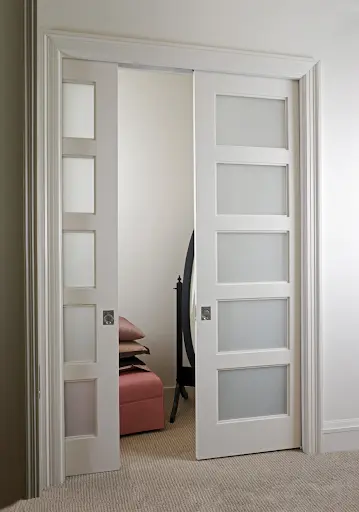
Not all pocket doors use traditional hinges — many slide-only designs rely entirely on rollers and tracks. However, bifold pocket doors, pivot pocket doors, and pocket doors with barn-door-style hardware all incorporate hinges that are subject to their own set of problems. Even slide-only pocket doors may have small pivot hinges at the guides or stops.
Squeaking That Won't Stop
A squeaking pocket door hinge is more than an annoyance — it indicates friction between metal surfaces that should be moving smoothly against each other. The first step is always lubrication with a proper hinge lubricant (not WD-40, which evaporates quickly and attracts dust). Silicone-based or PTFE lubricants are ideal for pocket door hinges.
If lubrication stops the squeak for a few weeks but it keeps coming back, the hinge knuckles or pin surfaces are worn. Worn metal surfaces create microscopic irregularities that no amount of lubrication can permanently smooth. At this point, hinge replacement is the only lasting solution. Continuing to lubricate a worn hinge delays the inevitable while the wear pattern gets progressively worse.
Door Sagging or Dragging
A sagging pocket door is one of the most common issues we resolve across Orlando, Miami, and Fort Myers. The door hangs lower on one side and drags against the floor or bottom guide, making it difficult to slide.
The most common cause is stripped screw holes. The screws that hold the hinge or roller bracket to the door or frame gradually loosen as the wood fibers around them compress and strip out. This is especially common with softwood door panels and frames, which are standard in Florida construction. Once the screw holes are stripped, the hinge or bracket can no longer hold the door at the correct height.
The wrong hinge weight rating also causes sagging. Every hinge is rated for a specific door weight. If a hinge rated for a 50-pound door is installed on an 80-pound door, the hinge barrel will gradually bend under the excess load, causing the door to drop. This is a common issue in homes where the original builder installed lightweight hardware on heavier-than-standard doors to cut costs.
Repair involves filling and re-drilling the screw holes with hardwood dowels, then installing correctly rated hinges. In some cases, the rollers also need attention since a sagging door puts uneven stress on the roller system.
Hinge Pins Falling Out
If your pocket door hinge pins keep working themselves loose and falling out, the hinge knuckles are worn and no longer gripping the pin tightly. This is a safety issue — a door that loses a hinge pin while in motion can swing unexpectedly or fall off its support.
Worn knuckles cannot be repaired; the entire hinge needs to be replaced. When replacing hinges with loose pins, we always check the opposite hinge as well. Wear tends to be symmetrical, and replacing only one hinge often just transfers the stress to the remaining original hinge, accelerating its failure.
Dealing With a Stubborn Lock or Sagging Door?
We specialize in pocket door lock and hinge repair throughout Florida. Most jobs are completed in a single visit.
Repair vs Replace — How to Decide
Not every pocket door lock or hinge problem requires full replacement. Here is a practical framework for deciding whether repair or replacement is the better investment:
Repair makes sense when: the hardware is less than 5 years old, the issue is a simple misalignment or loose screw, the lock or hinge mechanism itself is still in good condition, or the problem has only occurred once. Strike plate realignment, screw hole reinforcement, and lubrication are cost-effective repairs that can add years of life to otherwise good hardware.
Replacement makes sense when: the hardware is more than 8 to 10 years old, the same problem keeps recurring after repair, the internal mechanism is corroded or broken, the hardware is builder-grade and underrated for the door weight, or you are upgrading for security or accessibility reasons. Replacement eliminates the cycle of repeated repairs and typically costs less in the long run than three or four repair visits.
Our technicians always explain both options and provide transparent pricing for each. We never push replacement when a simple repair will do the job — and we never patch a problem that genuinely needs new hardware.
Why Pocket Door Hardware Is Different From Standard Doors
One of the biggest mistakes homeowners and even general contractors make is treating pocket door hardware like standard door hardware. The two are fundamentally different, and using standard parts or techniques on a pocket door almost always creates new problems.
Thinner panels: Most pocket doors are 1-3/8 inches thick, compared to 1-3/4 inches for standard interior doors. That 3/8-inch difference drastically limits the depth of mortise cuts for locks and the size of hinge screws that can be used. Standard locks are too deep for pocket door panels, and standard hinge screws are too long — they will poke through the opposite face of the door.
Specialized lock mechanisms: Because pocket doors slide into a wall cavity, they cannot use standard latch bolts that extend perpendicular to the door face. Pocket door locks use hook, claw, or edge-pull mechanisms that engage laterally. These mechanisms require pocket-door-specific strike plates that are recessed into the jamb at precise depths.
Limited access: Once a pocket door is installed, the back side of the door is hidden inside the wall. This means any hardware that requires access to both sides of the door — like a through-bolt lock or a standard hinge — cannot be serviced without removing the door from the pocket. Pocket-door-specific hardware is designed to be installed and adjusted from the exposed face only.
This is why we always recommend working with a pocket door specialist rather than a general handyman for lock and hinge work. The tolerances are tighter, the parts are specific, and the margin for error is much smaller.
How We Diagnose and Fix Lock & Hinge Issues
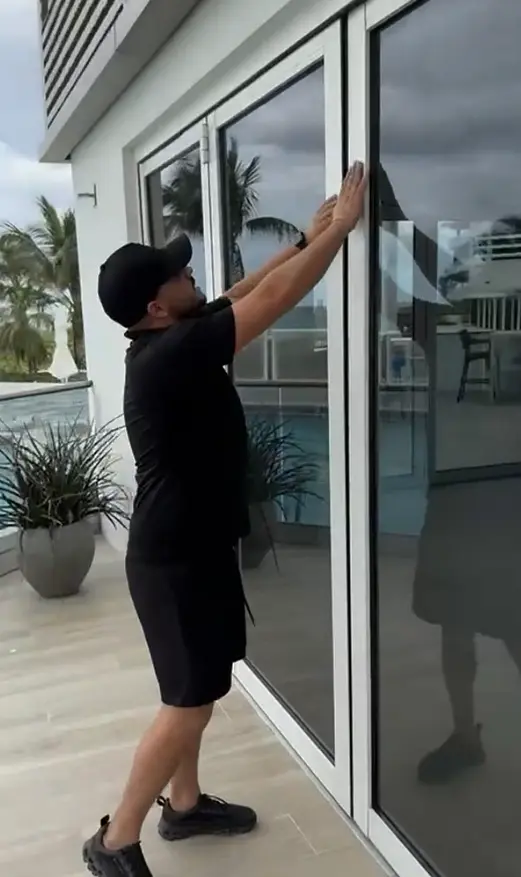
Every pocket door lock or hinge repair starts with a thorough diagnostic. We do not guess at the problem — we systematically test each component to find the root cause. Here is what our process looks like:
Visual inspection: We examine the lock body, strike plate, hinge leaves, hinge pins, screw heads, and surrounding wood for visible wear, damage, or misalignment. We check for signs of previous repair attempts, incorrect hardware, or wood damage from humidity.
Functional testing: We cycle the lock and hinges through their full range of motion multiple times, feeling for resistance, play, or irregularities. We test the lock in both locked and unlocked positions and check whether the door can be pushed open when locked.
Alignment measurement: We use precision tools to measure the gap between the door and jamb, the lock-to-strike alignment, and the hinge-to-frame alignment. Even 1/16 of an inch of misalignment can prevent a pocket door lock from latching properly.
Root cause determination: Based on the inspection and testing, we identify the root cause — not just the symptom. If a lock is not latching because the door is sagging, fixing the lock without addressing the sag will only provide a temporary solution. We address all contributing factors in a single visit whenever possible.
Frequently Asked Questions About Pocket Door Locks & Hinges
Can you put a regular lock on a pocket door?
No. Standard door locks will not work on pocket doors because the door slides into the wall cavity rather than swinging on a frame. Pocket doors require specialized mortise locks with a hook or claw mechanism that engages a strike plate on the jamb. Attempting to install a regular lock will damage the door panel and may interfere with the pocket frame. Our lock repair service includes sourcing and installing the correct pocket-door-specific hardware.
How much does pocket door lock or hinge repair cost?
Pocket door lock repairs typically cost between $100 and $300, depending on whether the lock needs adjustment, a new strike plate, or full replacement. Hinge repairs range from $75 to $250. Complex jobs involving mortise recutting or frame modification may cost more. Call (954) 727-5410 or request a free estimate online for exact pricing.
How long does pocket door lock or hinge repair take?
Most pocket door lock and hinge repairs take 30 minutes to 2 hours. Simple adjustments like realigning a strike plate or tightening hinge screws are on the shorter end. Full lock or hinge replacements, especially when mortise recutting is needed, may take up to 3 hours. Most jobs are completed in a single visit.
Are there ADA-compliant pocket door locks?
Yes. ADA-compliant pocket door locks feature lever-style pulls that can be operated with one hand and without tight grasping or twisting. These are required for commercial spaces and are also popular in residential settings for accessibility and aging-in-place renovations. We install ADA-compliant hardware for both commercial and residential pocket doors.
Why does my pocket door lock keep coming unlocked?
A pocket door lock that will not stay latched usually has a worn catch mechanism, a misaligned strike plate, or a mortise pocket that has loosened over time. Vibration from daily use can gradually shift the strike plate out of alignment. Our technicians can determine whether a simple adjustment will fix the issue or whether the lock hardware needs replacement.