

Pocket doors are one of the most space-efficient door solutions in any home or business, but they depend on a small, often-overlooked component to function properly: the rollers. These small wheels sit inside the header above your door and carry the entire weight of the panel as it slides back and forth along the track.
When pocket door rollers start to fail, the symptoms can range from mildly annoying to completely unusable. A door that once glided effortlessly now drags, jumps, grinds, or refuses to close flush. In Florida, where humidity accelerates corrosion and homes settle on sandy soil, roller failure is one of the most common pocket door problems we see.
Here are the five warning signs that your pocket door rollers need replacing — and what to do about each one.
Sign #1 — Your Door Drags or Feels Heavy to Slide
A healthy pocket door should glide with minimal effort. If you find yourself leaning into the door or using both hands to push it open or closed, the rollers are almost certainly the problem.
Over time, the bearings inside pocket door rollers wear down and lose their smooth rotation. Instead of rolling freely along the track, the wheels start to resist movement. This forces the door to drag against the track surface, which creates friction and makes the door feel much heavier than it actually is.
In Florida, this process happens faster than in drier climates. The combination of high humidity and salt air — especially in coastal areas like Miami and Fort Myers — corrodes the roller bearings from the inside out. Even stainless steel rollers can develop pitting and rust in these conditions. If your door was easy to slide a year ago but now requires real effort, humidity-driven corrosion is the most likely cause.
Ignoring a dragging door does more than inconvenience you. The extra friction wears grooves into the track, damages the door panel edges, and can eventually warp the header frame. What starts as a simple roller replacement can turn into a full track and frame repair if left too long.
Sign #2 — The Door Jumps Off the Track
If your pocket door suddenly pops out of alignment mid-slide, catching or lurching sideways, the rollers have developed flat spots. This is one of the more alarming signs because a derailed pocket door can damage surrounding drywall and is difficult to re-seat without removing trim.
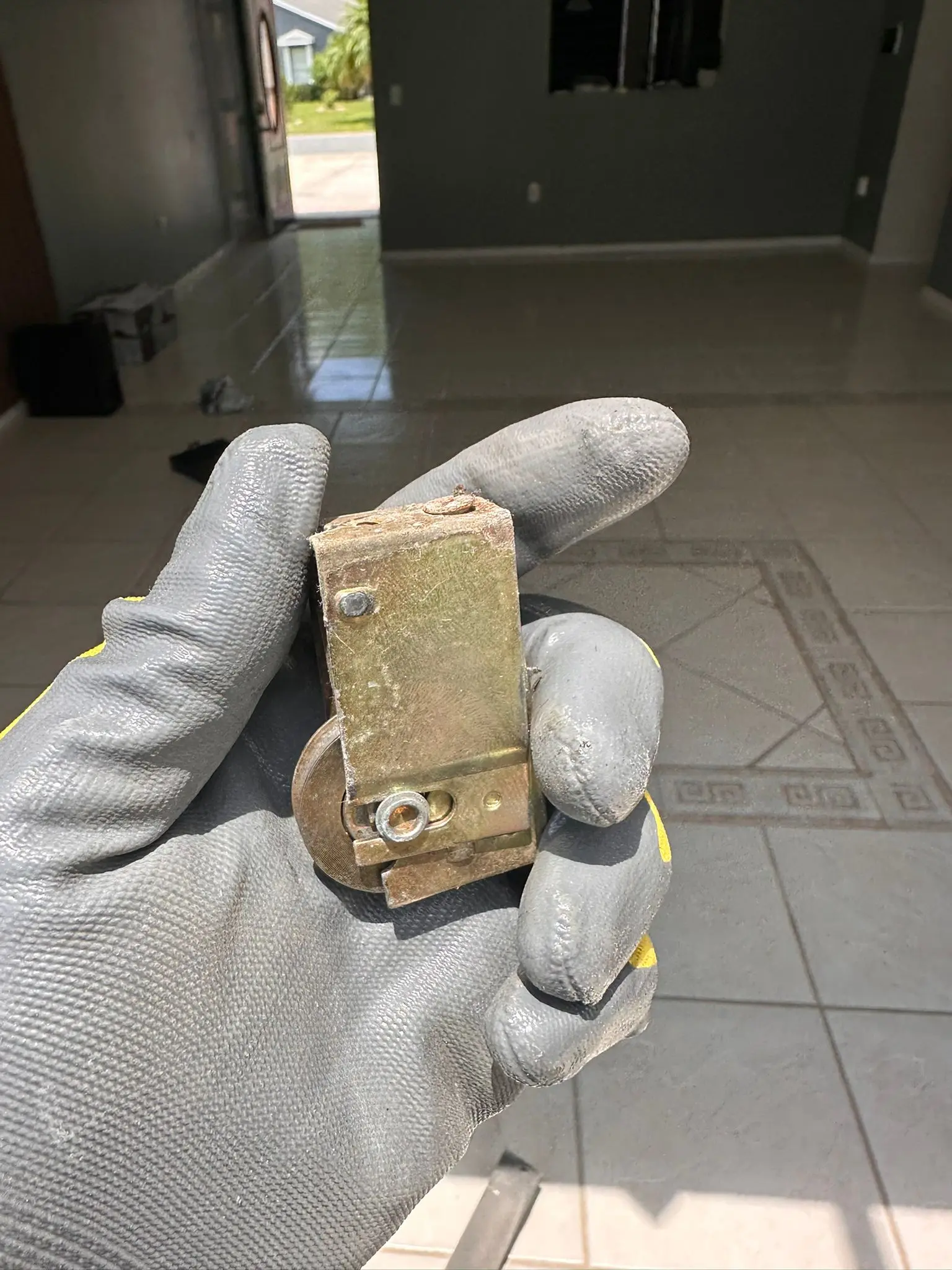
Flat spots develop when a roller stops spinning freely and starts sliding instead of rolling. The constant friction against the track grinds a flat area onto the wheel surface. Once that flat spot exists, the roller hits a bump every time it rotates past that point, causing the door to jump or lurch.
The heavier the door, the worse this problem becomes. Solid-core wood doors and glass pocket doors put significantly more stress on each roller. A flat spot that might cause a mild hiccup on a lightweight hollow-core door can completely derail a 90-pound solid panel.
If your door has jumped the track more than once, do not keep forcing it back into position. Each time a door derails, it bends the track slightly. After several derailments, the track itself may need to be replaced — a much larger and more expensive job. Call a professional for roller replacement and frame repair before the damage compounds.
Sign #3 — You Hear Grinding, Scraping, or Rattling
A well-functioning pocket door is nearly silent. If you hear grinding, scraping, or metallic rattling every time the door moves, the roller hardware is failing.
Grinding or scraping sounds indicate metal-on-metal contact. This happens when the roller bearings have seized, the wheel surface has worn through its coating, or the roller carriage itself is dragging against the track. In any of these scenarios, the sound is telling you that components are actively destroying each other.
Rattling is a different issue but equally concerning. Loose roller carriages, worn mounting hardware, or cracked roller wheels all produce a distinctive rattle as the door moves. Sometimes the rattle is accompanied by a slight wobble in the door panel, which means the rollers are no longer holding the door steady in the track.
Many homeowners try lubricating a noisy pocket door with WD-40 or silicone spray. While lubrication can temporarily quiet a door with minor bearing wear, it does not fix the underlying problem. If the noise returns within a few weeks of lubricating, the rollers need to be replaced, not lubricated. Continued use of a grinding door accelerates track wear and can score permanent grooves into the header rail.
Hearing Strange Noises From Your Pocket Door?
Our technicians diagnose and fix roller problems across Florida — usually in a single visit.
Sign #4 — The Door Won't Close Flush
When your pocket door closes but leaves a visible gap at the top, bottom, or along the edge of the jamb, the rollers are likely at different heights. This is one of the subtler signs of roller failure, but it directly affects both the appearance and function of your door.
Pocket doors hang from two rollers — one near the leading edge and one near the trailing edge. Each roller has an adjustment screw that controls its height. When both rollers are in good condition and properly adjusted, the door hangs perfectly level and meets the jamb evenly when closed.
As rollers wear unevenly — which is common because the leading roller bears more stress during opening — the door begins to tilt. A tilted door cannot seat properly against the jamb. You will notice a gap that is wider at the top than the bottom, or vice versa. Some homeowners mistake this for a settling house or warped door, but in most cases, the door panel is fine — the rollers are just worn unevenly.
A door that does not close flush also compromises privacy and sound insulation, which is especially problematic for bathroom and bedroom pocket doors. If you have adjusted the height screws and the door still will not sit level, the rollers themselves are worn past the point where adjustment can compensate. Replacement is the only permanent fix.
Sign #5 — Your Rollers Are More Than 10 Years Old
Even if your pocket door seems to be working fine, rollers that are more than a decade old are living on borrowed time. Most residential pocket door rollers are rated for 10 to 15 years of normal use. In Florida's humid climate, that lifespan is often closer to 7 to 10 years.
Builder-grade rollers — the type installed in most new construction — tend to fail sooner because they are built to a price point rather than a durability standard. If your home was built in the last 10 to 15 years and the pocket doors still have the original hardware, proactive replacement is worth considering. It is far less expensive and disruptive to replace rollers on your schedule than to deal with an emergency when a door jams shut on a Saturday night.
Preventive roller replacement is especially important for commercial pocket doors in restaurants, medical offices, and retail spaces. These doors see significantly more daily use than residential doors and should be inspected annually. A jammed pocket door in a commercial setting can disrupt operations and create accessibility issues.
Why DIY Roller Replacement Usually Makes It Worse
We understand the appeal of fixing a pocket door yourself. There are plenty of YouTube videos that make it look straightforward: remove the trim, lift out the door, swap the rollers, put it back. In practice, DIY pocket door roller replacement goes wrong more often than it goes right.
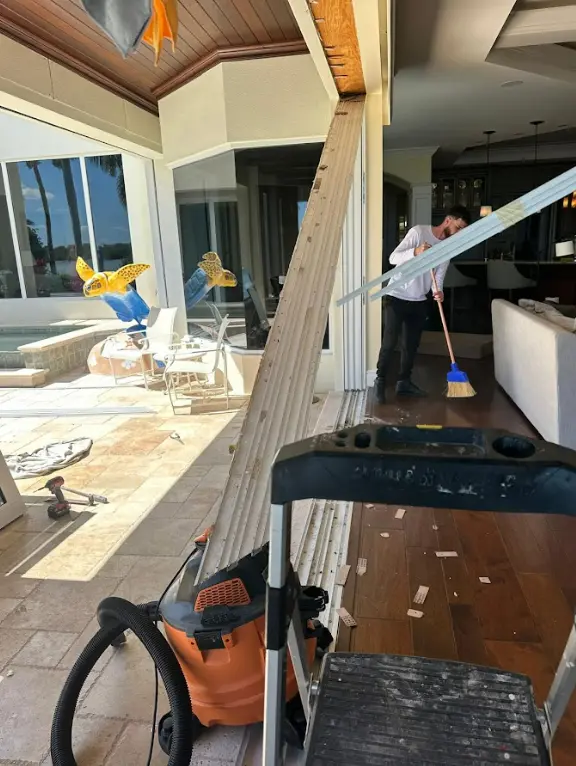
The most common DIY mistake is choosing the wrong roller. Pocket door rollers are not universal. They vary by weight capacity, wheel diameter, carriage width, and mounting style. Installing a roller rated for a 60-pound door on a 100-pound solid-core panel will result in premature failure — sometimes within weeks. Worse, an undersized roller can bend the track under the excess weight, turning a $200 repair into an $800 one.
The second most common mistake is damaging the pocket frame during door removal. Pocket doors are recessed into the wall, and the clearances are tight. Pulling a door out at the wrong angle can crack drywall, bend the split studs inside the pocket, or damage the door panel itself. Professional technicians use specific techniques and tools to extract pocket doors without collateral damage.
Finally, many DIY repairs fail to address the root cause. If the rollers failed because the track is bent, installing new rollers on a damaged track will produce the same symptoms within months. A professional inspection identifies all contributing factors — not just the most obvious one.
How We Replace Pocket Door Rollers
At Pocket Door Services, we have refined our roller replacement process across thousands of jobs throughout Orlando, Miami, and Fort Myers. Here is what our process looks like:
Step 1: Full Door and Track Inspection
Before we touch a single screw, we inspect the entire system. We check the door weight, panel condition, track alignment, header frame integrity, and existing roller specifications. This tells us exactly what replacement parts are needed and whether any additional repairs are required.
Step 2: Safe Door Extraction
We carefully remove the door trim and extract the door panel using techniques that protect the surrounding drywall and frame. For heavier doors, we use support braces to control the panel during removal and prevent damage.
Step 3: Weight-Matched Roller Installation
We install rollers that are specifically rated for your door's weight and dimensions. We stock a wide range of roller types on our trucks, including heavy-duty options for solid-core and glass doors. Every roller is tested for smooth rotation before installation.
Step 4: Post-Install Adjustment and Testing
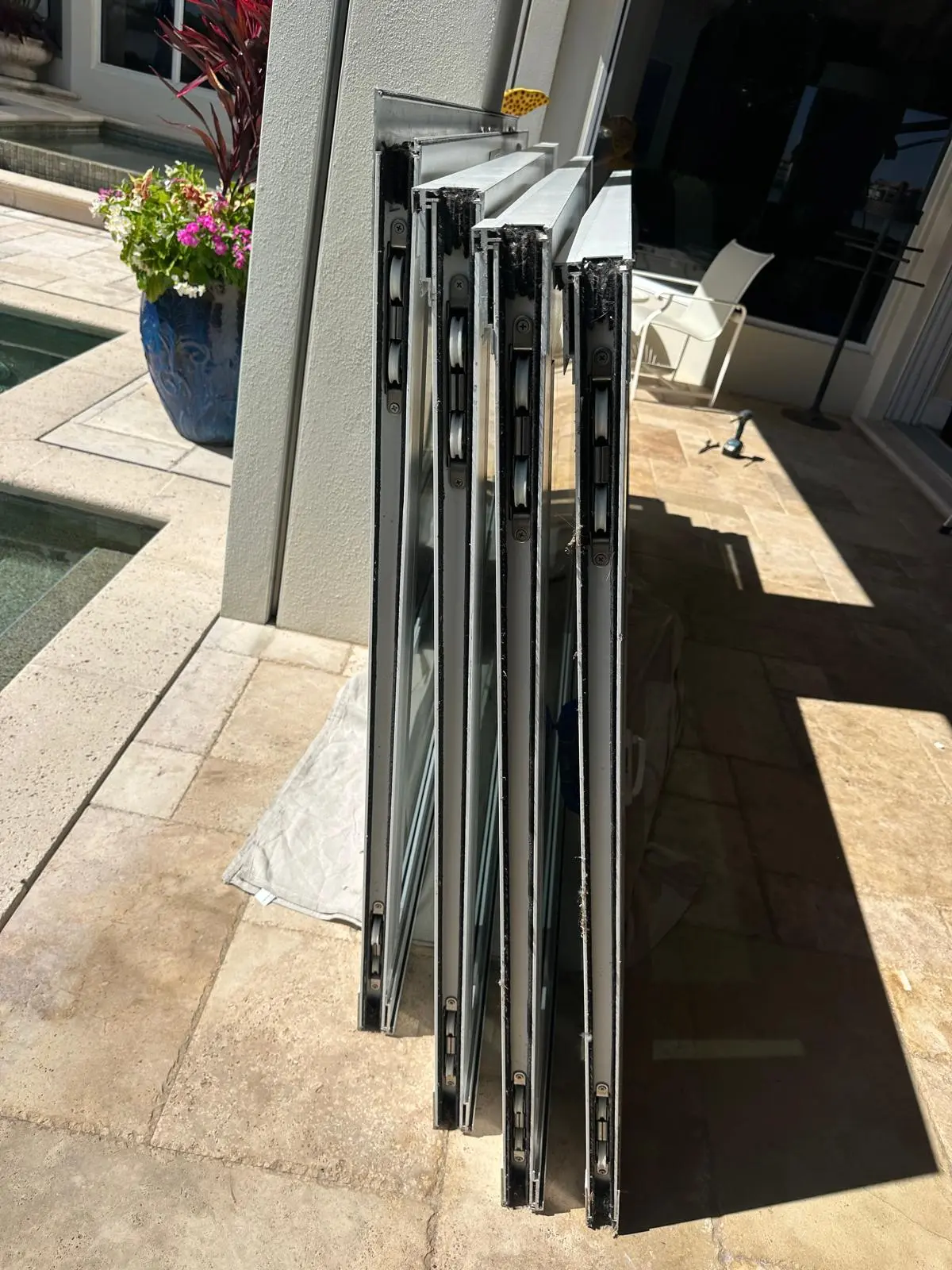
After the door is rehung, we fine-tune the roller height adjustment screws until the door sits perfectly level and meets the jamb with an even gap. We test the door through multiple full open-close cycles to verify smooth, quiet operation. We also check that the lock and hinges are functioning correctly before we consider the job complete.
Frequently Asked Questions About Pocket Door Roller Replacement
How much does pocket door roller replacement cost?
Pocket door roller replacement typically costs between $150 and $400 depending on the door weight, roller type, and whether the track also needs repair. Heavy solid-core doors or commercial-grade hardware may cost more. We provide free estimates so you know the exact cost before any work begins. Call us at (954) 727-5410 or request an estimate online.
How long does it take to replace pocket door rollers?
Most residential pocket door roller replacements take 1 to 2 hours. If the track is damaged or the frame needs adjustment, the job may take 3 to 4 hours. Our technicians carry common roller sizes on their trucks, so most jobs are completed in a single visit without needing to order parts.
Can I replace pocket door rollers myself?
While it is technically possible, DIY pocket door roller replacement often causes additional damage. Removing the door without proper support can crack drywall, bend the track, or damage the door panel. Choosing the wrong roller weight rating is also a common mistake that leads to premature failure. We recommend professional installation to protect your investment and avoid costly secondary damage.
How long do pocket door rollers last?
Quality pocket door rollers last 10 to 15 years under normal use. In humid climates like Florida, corrosion can shorten that lifespan to 7 to 10 years. Heavy daily use, oversized doors, and builder-grade rollers can also reduce roller life significantly. Upgrading to commercial-grade rollers during replacement can extend the next service interval.
Do you offer emergency pocket door roller service?
Yes. We offer 24/7 emergency pocket door repair across Orlando, Miami, and Fort Myers. If your pocket door is stuck open or closed and you need it fixed urgently, call us at (954) 727-5410 for same-day service.